Posted on: September 27th, 2026 by St Stephens Office
From the depths of Egypt to the teachings of Jesus, learn how humility and love can transform our lives. Are you ready to embrace the call for unity and compassion?
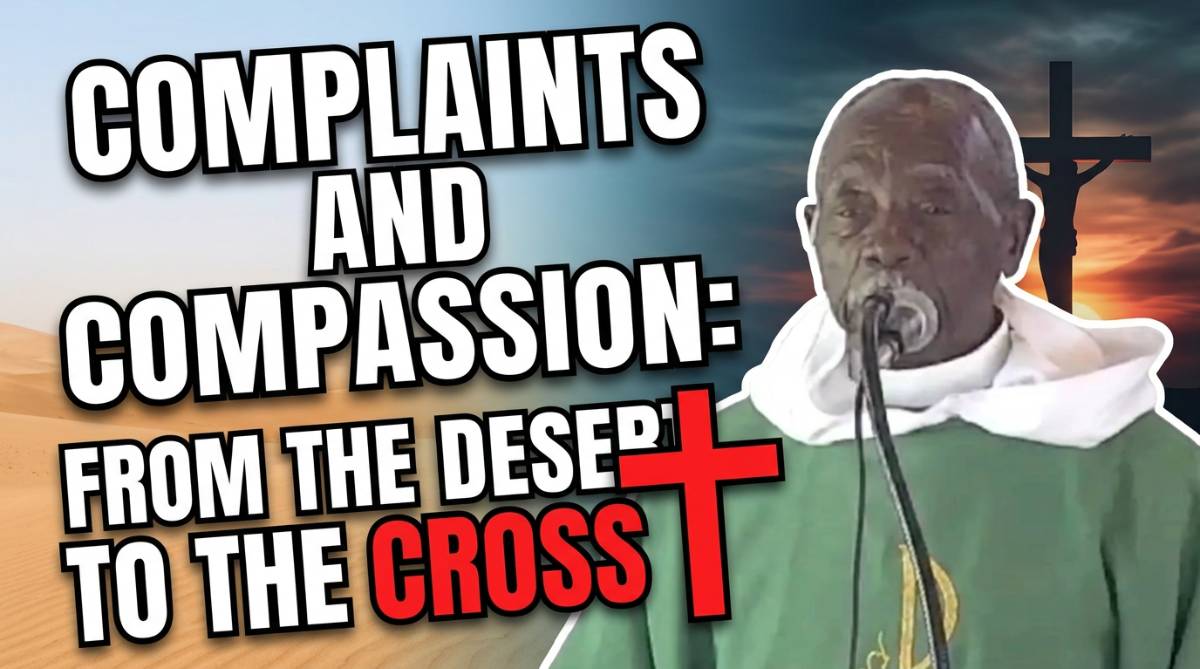
As I reflect upon the stories from the Old Testament, it becomes evident that this holy book not only serves as a historical account but primarily reveals the profound relationship between God and His beloved people. Despite our often ungrateful response, God continually treated us with compassion, mercy, and love. Even when faced with trials, God’s steadfastness remained evident.
Let me take you back to a time when God was rescuing the Israelites from Egypt. They found themselves at a place without water and began complaining against Moses. Complaint is far from a new phenomenon, isn’t it? We often find ourselves moaning about our circumstances, even when our lives are abundant with blessings.
The story unfolds with God instructing Moses to use his stick to bring forth water from the rock—an act of divine providence and greatness. Yet, even after witnessing such a miracle, the people questioned, “Is the Lord among us or not?” These are questions not only rooted in the past; they echo in our hearts even today. But let us remember, the Lord is indeed among us. We can find Him in our seeking, in our knocking, and in our asking.
The Psalms remind us to heed the teachings that pour forth like rain. Oral history kept the legacy of God’s good deeds alive through generations. Yet somehow, those deeds were forgotten amid complaints and doubt, with many yearning for the days of slavery over divine freedom.
The challenges we face today might be different, but they mirror this historic struggle. When we encounter difficulties, we ask ourselves, “Where is God?” But let us carry faith that God is ever-present among us.
In the New Testament, we find Peter’s attempt to deter Jesus, met with the reminder to follow, not lead. Paul’s epistles urge Christians to be of one mind, to act in accord, and not as programmed machines lacking emotion. I once owned a Samsung phone that prompted AI-generated responses, which often led me to forge my genuine reactions instead.
Our journey, too, must be genuine, rooted in love, humility, and obedience. These are virtues we must reclaim and nurture, for in them, we meet the Lord.
The temple held both economic and social importance; it was more than a place of worship, it was a hub for religious transformation. The chaos Jesus encountered—and His subsequent cleansing of the temple—underscores the purity our souls must strive for.
Pharisees and Sadducees questioned His authority, never recognizing John the Baptist, and thus, Jesus Himself. Yet, Jesus walked a path of teaching and healing, transforming the world through parables that left the wise contemplating profound truths.
In our lives, it is imperative to question whether the Lord is among us. Are we humble? Are we ready to sacrifice, even unto death? My brothers and sisters, to live as Christians is to live in concord with one another, with humility and unyielding love.
As Paul wisely advises, being a Christian extends beyond words; it calls us to follow through with our actions. Let us gather in unity, overcoming discord through steadfast love.
In closing, I urge you to reflect deeply on your influences and surroundings. “Show me your friends, and I’ll tell you your character,” as the proverb goes. Let us strive to be like children in faith, letting love and concord guide us through life.
Remember, the essence of our faith is brought to life in community and shared understanding. Let us talk about Jesus and the wondrous deeds He continues to perform in our lives.
In the name of God the Father, God the Son, and God the Holy Spirit. Amen.
Call to Action: As we ponder these reflections, let us actively seek to be a community that embodies love, mercy, and humility. Reach out, connect, and discuss these fundamental truths with someone today, sharing the light of compassion and understanding that God has shown us.
Posted on: September 13th, 2026 by St Stephens Office
In today’s world, unforgiveness can seem as common as a plotline in a classic spaghetti Western; it might appear thrilling in cinema, but it’s disastrous when practiced in real life.
Gracious Lord, may your word today guide us, strengthen our spirits, and infuse us with wisdom. As we dive into this reflection, may we all be drawn closer to your blessed kingdom through the clarity and brightness of your holy word. Our desire is for light, wisdom, and nourishment to illuminate the paths we traverse daily.
The Essence of Forgiveness
The world becomes a chaotic Wild West when unforgiveness becomes a habitual way of life.
Yet, we often cling to it. Why? The core message for today is simple: We must forgive because God forgives. If we aim for lives less like tumultuous films and more like the kingdom of God, our mantra should be, “God forgives, so should I.”
A Biblical Perspective
Consider this: the Apostle Peter once posed a question about forgiveness to Jesus, asking, “Lord, if another member of the church sins against me, how often should I forgive? As many as seven times?” Peter thought himself generous, but Jesus raised the bar drastically, saying, “Not seven times, but seventy-seven times.”
To illustrate, Jesus shared a parable about a king who forgave a massive debt owed by a slave—a debt that was insurmountable. Yet, that same slave failed to extend forgiveness to a fellow debtor. Jesus’ parable teaches us that the kingdom of heaven is not about rigid justice but overwhelming mercy.
Understanding True Forgiveness
The crux of this message is that forgiveness from God is not earned; it’s a merciful gift. If we grasp the full depth of God’s forgiveness, it transforms us, making us more forgiving individuals.
At St. Stephen’s, we aim to embody this transformation, allowing God’s grace to overflow from us, impacting everyone we interact with. It’s not about striving harder but opening our hearts to the abundance of God’s mercy, grace, and forgiveness.
The Impact of Forgiveness
Consider the woman in the book of Luke who, having been forgiven much, loved much. Understanding forgiveness doesn’t drive us to shame or distance from Jesus; rather, it emboldens us to love and worship Him unabashedly.
Our mission should extend beyond increasing church attendance; it should focus on introducing people to Jesus in the transformative way this woman experienced.
Navigating Challenges
Challenges in forgiving others exist, especially when faced with deep wounds or ongoing hurt. But remember, while we’re not always called to forgive sins—we leave that to God—we can extend mercy. Mercy invites others on a journey towards redemption without demanding they earn it from us first.
Conclusion
A poignant reminder comes from a sermon preached after the tragic events of September 11th, 2001. On that day, people crowded churches, seeking a path away from the destruction that unforgiveness wrought. It’s a stark reminder that revenge and grudges don’t lead to life but to death and destruction.
If you’re weary of the unforgiving path that leads away from true life, know there’s another path: the path of mercy and forgiveness that Jesus paved for us. Let’s walk this path boldly, trusting God to guide us and seeking the transformative life we’ve been yearning for.
Call to Action
Let us open our hearts to God’s abundant grace, seek mercy, and transform ourselves into beings of forgiveness. Reflect on what truly holds us back from being as forgiving as we should be, and step forward with courage. Together, let’s create a life rich with forgiveness, modeled after the kingdom of heaven.
Posted on: September 8th, 2026 by St Stephens Office
In today’s reflection, I’d like to invite you to embark on a journey with me–the journey of forgiveness and healing. It won’t be an easy path, but it’s one that promises profound reconciliation and spiritual peace.
As we begin, let us pray: Gracious Lord, may your word be our guide and sustenance, bringing wisdom that renews us, drawing us all into your blessed kingdom through Christ our Savior.
Following Together, Forgiving Together
Our gospel readings teach us that following Christ is not a solitary journey; it’s a shared endeavor. We do not walk alone; we walk with those who will sometimes fail us. Jesus compares this community of believers to a shepherd who tirelessly seeks out the lost sheep, striving to reunite them with the flock.
He’s intentional about demonstrating the necessity of reconciliation within the church. When one person errs, restoration is a community effort. And while it may not come naturally, it’s an integral part of our faith.
A Process of Reconciliation
Often, our initial response to being wronged isn’t reconciliation. We retreat inward, judging the actions and character of those who’ve hurt us. But Jesus calls for a different approach: address the individual privately first, allowing truth and understanding to nurture healing.
If private conversations fail, we involve trustworthy community members as witnesses—not to condemn, but to remember who this person truly is, recalling their contributions to our shared spiritual journey.
Even when an individual strays further, Jesus instructs us to embrace them with open hearts and unyielding love, just as he dined with and cherished tax collectors and sinners. As a community, we must extend prayer and ministry to those in need of transformation.
Building a Christ-Like Community
To grow as a church, we must first grow in Christ’s image. It’s tempting to dream of overflowing pews and expanded ministries, but true growth begins with a community rooted in reconciliation and forgiveness. We must emulate Jesus’ joy and persistence in enduring the cross for the sake of unity.
Before inviting others in, we must create a garden of spiritual togetherness, where even if our aspirations differ from reality, we cultivate an environment of love and understanding.
Belonging Together Through Faith
Belonging to the church isn’t achieved through isolation or mere participation in virtual services. It’s found in genuine connections with fellow believers, embracing that the church community is a powerful source of God’s healing gifts.
Whether burdened by our own sins or others’, the church remains a sanctuary for forgiveness. Together, we confess, repent, and strive for the holiness God envisions for us.
Living Jesus’ Teachings Beyond Church Walls
In our broken world where discord is rampant, Jesus’ teachings offer a blueprint for healing beyond church walls. By resisting the urge to demonize and opting for truth and love, we set powerful examples in our personal and professional lives, manifesting God’s Kingdom on earth.
As stewards of reconciliation and forgiveness, we are called to live out these values not only in our spiritual community but also in our everyday interactions.
Call to Action
I encourage you to carry these reflections with you. Pursue forgiveness and healing in your personal relationships, creating spaces where others can feel the embrace of understanding and grace. Let’s embody Christ’s teachings, bringing about transformation not just within our church, but within the world. As we say in prayer, “Thy will be done,” let it begin with the steps we take together.
May God’s Word guide you and grant you peace. Amen.
Posted on: August 23rd, 2026 by St Stephens Office
“In the scriptures, the Lord says the people of Israel know Him by His acts, but Moses knew Him by His ways. Often, Christians follow Jesus for His acts–the miracles, prophecies, and solutions to their burdens. Similarly today…”
I’ve been to many Anglican churches, but there is a unique and powerful energy here, and I feel it strongly as we collectively sing hymns of praise to the Lord. Today, I want to focus my sermon on the profound gospel passage from Matthew 16:13-20, 28, where Jesus makes a pivotal statement: “I will build my Church.” This marks the first introduction of the word ecclesia, or Church, in the New Testament.
Before making this statement, Jesus asks His disciples two major questions. People had witnessed His miracles—healing the sick and casting out devils, an act unheard of in the history of Israel. Even in the Old Testament, while prophets performed miracles, casting out devils was never recorded. Jesus’ authority over demons and evil forces was unparalleled, and before His impending death, He turns to His disciples to seek their understanding of Him.
He first asks them, “Who do people say that I am?” The disciples respond with what popular opinion suggests, linking Him to Elijah or John the Baptist or comparing Him to prophets of old. Then, Jesus asks them for their personal view, pressing, “What about you? Who do you say that I am?” Silence follows this poignant question.
In the scriptures, the Lord says the people of Israel know Him by His acts, but Moses knew Him by His ways. Often, Christians follow Jesus for His acts—the miracles, prophecies, and solutions to their burdens. Similarly today, many seek churches with prophecies and miracles, attracted by the promise of relief and not an understanding of who Christ truly is.
Contrasting with that, Moses built a personal relationship with God, knowing Him face to face and understanding His merciful nature. When Jesus asks His disciples, “Who do you say that I am?” Peter stands up and proclaims, “You are the Christ, the Son of the living God.” This revelation wasn’t revealed by flesh but was a divine insight into His true identity—what many Jews struggled to comprehend.
The term Christ or Kristos means “the anointed,” synonymous with the Messiah in Hebrew—the Savior delivering humanity. Peter’s recognition of Jesus as Christ earns him a significant promise: “You are Peter, and on this rock I will build my church.” Jesus’ declaration signifies that Christ is the foundation of the Church, and no force of darkness can prevail against it. The Church, built with the blood of Jesus, remains indomitable against persecution.
Jesus promises Peter the keys of the Kingdom, symbolizing authority and knowledge—insight into divine mysteries, a message for Christians today not to be mere followers. Let us strive for a genuine revelation of who Christ is. When asked about your faith in various settings, have a ready and authentic answer, affirming Jesus as the Son of the living God. Across religions, this divine attribute of Christ is often disputed, yet we affirm in our creeds His true essence with the Father.
By fully understanding this revelation, you gain authority. Don’t let fear overpower you—not from evil or illness, for with these keys, what you bind or permit on Earth echoes in Heaven. Believers must always profess positively, maintaining health during illness and light amid darkness. Demons cannot torment you because you are part of His Kingdom.
Let me pray for you. I thank you, Father, for your word today, reminding us that you are building your Church, with us as participants in its growth. Bless St. Stephen’s Anglican Church with an ever-deepening intimacy with you. May your followers here know you more deeply, benefit from your acts, and grow to impact their community positively.
As we conclude, I urge you to deepen your relationship with Christ, recognizing and voicing His divine nature, and wielding your authority and faith for a transformative life. Let’s build our lives on this solid Rock of faith—Jesus Christ. Amen.
Life is inevitably a journey filled with trials. Whether it’s financial stress, family issues, health hurdles, or even immigration challenges, each of us carries silent burdens. During these struggles, we might feel distant from God…
In the name of the Father, Son, and Holy Spirit, I wish to share some reflections that touched my heart during my recent visit to Canada. I took a few weeks for vacation to step away from the ministry and schooling demands, seeking rest and revival for the work ahead. I thank God for this enriching experience, particularly my time spent with the communities of Christ Church in Brampton and St. Stephen’s.
As I settled into St. Stephen’s, my heart lifted by the choir and the congregation’s warmth, I’ve reflected deeply on life’s struggles. Life is inevitably a journey filled with trials. Whether it’s financial stress, family issues, health hurdles, or even immigration challenges, each of us carries silent burdens. During these struggles, we might feel distant from God, questioning His presence and purpose in our lives. However, these challenges remind us, like the stories of Jacob and Saint Paul, that God is always with us, guiding and sustaining us.
Jacob’s story epitomizes this divine companionship. Wrestling with a mysterious man, later revealed as God, Jacob demonstrates courage and tenacity. Even in the struggle of guilt and fear, God appeared to him. This narrative teaches us about embracing our struggles as moments to cling tighter to God’s biblical promises.
Today, I encourage each of you to adopt the prayer of Jacob: “I will not let you go unless you bless me.” In doing so, we recognize that God’s grace is pivotal in shaping our response to life’s challenges. The grace of God empowers us to endure; it is essential for overcoming both physical and spiritual battles. The faithfulness of God is unwavering, standing the test of time against any hardship we face.
Beloved, as you walk your journey, remember that God is our ultimate healer. While His timing may differ from our expectations, His ways infinitely surpass ours. Though our struggles might linger for days or years, in His own time, God will renew our lives. So remain steadfast in faith, even if scarred by past struggles.
We must support each other in our faith journey, showing compassion akin to Jesus’ compassion amidst His own grief. Remember how Jesus, learning of John the Baptist’s death, still showed compassion to thousands. His work wasn’t deterred by personal sadness, teaching us the power of compassion and faith in action.
In this season, I urge us all to examine how we can cling to God during our personal wrestling and extend compassion to those in spiritual or emotional need. As Christians, building a compassionate heart for God’s work and toward each other amplifies our faith.
Let our lives reflect trust and faith in God, knowing He will manifest His blessings in our moments of trial. In times of difficulty, may we find comfort and emerge with testimonies that glorify God.
As I conclude, I invite you to re-examine your spiritual commitments and deepen your bond with God’s grace. Take a moment today to reach out with a compassionate heart and renew your resolve to live according to God’s word, trusting that He is always present.
May God show His presence in your struggles and bless you with strength and peace. Amen.
Call to Action: I encourage you to join us in worship this Sunday at St. Stephen’s, partake in the shared divine compassion, and discover your path through any life challenges you face. Let us journey together in faith and strength.
Truly, God’s mercies are renewed each and every morning. It is my hope and prayer that as we minister to you, the words we speak will be transformative, drawing you ever closer to His kingdom.
Introduction to the Kingdom
In reflection on the past three weeks, we’ve focused on the Kingdom of God. Through scriptural readings, we explored various parables used by Jesus to describe the kingdom. The consistent question posed is: What is the kingdom of God all about? And why does Jesus choose parables to elucidate the mysteries of this divine kingdom?
The Power of Parables
As we celebrate the ninth Sunday after Pentecost, we are reminded that the church signifies growth with the color green. It’s a call for us, as Christians, to not only grow but be transformed. The parables teach us that life in Christ is not confined within the four walls of a church; it’s about embodying Christ’s attributes in all aspects of life.
Lessons from the Readings
Our scriptural journey today begins with the story of Jacob and Laban from Genesis—a compelling lesson on the spirit of truth and trust. As Christians, we must understand that trust is a pillar of our faith journey. Human promises may falter, but God’s never do. Thus, we ought to place our confidence wholly in Him, as reminded by the book of Habakkuk.
Moreover, we are called to live out our faith through actions, showing the world the light and salt that we are meant to be. The Psalms remind us that those who trust in God become fruitful and steadfast. Navigating the trials and tribulations of life can be daunting, but our strength and hope stem from the Spirit interceding on our behalf.
Understanding the Kingdom
In our gospel reading, the kingdom of God is defined as the rule of God within our hearts. When this divine rule is embraced, it transforms every aspect of our lives, encouraging us to aspire towards heaven—the ultimate reward. The kingdom is likened to a pearl of great price, a treasure so valuable we’re willing to give up everything to attain it.
Living with a Kingdom Focus
Walking with Christ demands focus and determination—the very essence of our Christian journey. Our goal is to make it to heaven, shunning deceit and selfishness. We are encouraged to live in truth, love, and commitment, embodying the kingdom’s values in our daily interactions.
Conclusion: An Invitation to Transformation
May the kingdom of God act as a powerful yeast in our lives, fostering transformation into the likeness of Christ. Let it inspire us to act not out of compulsion but a heartfelt desire to align our lives with God’s purpose. As we traverse life’s ordinary times, let us treasure the things of God, knowing that a glorious reward awaits us.
In prayerful reflection, I urge each of us to live as people of the kingdom, transforming into “good and faithful servants” whom God will welcome into His eternal joy. This is not just a spiritual journey but a divine calling.
As we continue to embrace God’s Word, may you feel inspired to share this transformation with others. Let your life bear witness to the kingdom within you.
Call to Action: Let us strive to live not just for ourselves but for Him who calls us His own. Engage with your community, reflect on the teachings of Christ, and let us build the kingdom of God together. May His blessings be upon you as you walk this path of faith and transformation. Amen.me basic, sample markdown.
I remember learning a hymn, “New Every Morning.” I am reminded how we often follow without complete understanding, hoping one day for clarity. This leads me to share some insights on spirituality and the parable of the weeds and planting.
In those early days, singing meant following our seniors, often without grasping the full meaning. It was later, in middle school, that realization struck. It’s much like our spiritual journey—an ongoing learning process. Today, we turn our focus to Jesus Christ, His disciples, and a profound parable.
Parable of Weeds and Planting
The parable of weeds, planting, and harvest time holds deep symbolism. It reminds me of a lady, Jennifer T. Kalen, who stated, “What we carry in our physical wallets can tell a lot about who we are.” This offers a parallel to spiritual identity. Jesus, through His parables, speaks to us about choices and allegiances.
Understanding Kingdoms: Earthly and Heavenly
The disciples knew of earthly kingdoms, like the Roman Empire, but heavenly kingdoms were a mystery. Jesus described the kingdom of God, urging us to contemplate where we place our allegiance. Are we aligned with the flesh or the spirit?
Choosing Allegiances and The Division It Brings
Planting often presents the conundrum of deciding what should grow or be uprooted. It’s a reflection of our choices in life. Good seeds represent beings aligned with God’s kingdom, while bad seeds symbolize those aligned with evil. It’s up to us to choose where our allegiance lies.
A Parable’s Implications on Daily Life
The parable calls for patience and reflection. Like lemongrass, distinguishable by its scent, we should recognize goodness amidst challenges. It’s an assurance from Jesus that the end harvest will separate good from evil. Are we prepared for such an eventuality?
Embracing Patience and Unity
We are often impatient, seeking immediate results. Jesus instructs us to let good and bad grow together until harvest. It is in this waiting that our true character and allegiance reveal themselves. Let us not seek to play God, but to trust in His ultimate judgment.
Conclusion
In Galatians and Proverbs, the scriptures remind us that we reap what we sow. May we be guided by patience, choosing to be good seeds in God’s kingdom. The choice is ours, to align with God the Father, Son, and Holy Spirit, embracing His path for our lives. Amen.
In Africa, we like to say that a child may outgrow a father’s lap, but never his heart…. A father is the man who provides direction, the roof during life’s storms, and…
Today, I want to take a moment to honor our fathers. To every good father watching me, Happy Father’s Day in advance, and to every man carrying the burden of fatherhood, may your strength never fail.
Another African proverb says, “A father’s wealth is not in his pocket, but in the character of his children.”
Understanding the True Meaning of ‘Father’
Today, let us dissect and understand the true meaning of father by each letter:
F stands for Foundation: A father is the foundation of a home. If the foundation is shaky, the home trembles. Just like a tree’s strength comes from its deep roots, a father’s values form the roots of his family. Without a solid foundation, a home cannot stand.
A stands for Authority with Love: True fatherhood embodies authority not with fear, but with love. The analogy of a shepherd leading his flock represents this well. A father should lead with both discipline and compassion. Children should respect their fathers, not fear them.
T stands for Teacher: A father is the first life teacher. By living by example, a father instills values in his children. If a father lies, his children will learn to do the same. If he shows integrity, his children will grow up to be honorable.
H stands for Hard Work: A father models hard work. Provision is an integral part of fatherhood, and children must learn that nothing worthwhile is achieved without effort.
E stands for Encourager: Fathers play a crucial role in encouraging their children. Although many adults still yearn to hear affirmations like “I am proud of you,” it is a father’s words that help children grow. Speak life into them.
R stands for Responsibility: A father shoulders responsibility—not just financial, but also in ensuring peace, protection, and presence in the family. Responsibility is the true crown of fatherhood.
Responsibility and Legacy
Being a father is not merely a matter of biology, but one of responsibility, sacrifice, and legacy. Any man can produce a child, but not every man becomes a father. A true father’s legacy is one of wisdom and guidance, passing down not only goods but wisdom.
Embracing Newness of Life: A Spiritual Perspective
Apart from parenting, the essence of faith resonates with the responsibility of a father. A father’s guidance must align with spiritual values as we seek the “newness of life” that comes from Christ. As I reflect deeply on this, the insights from religious texts reinforce that faith comes by hearing and believing in teachings.
Living by Example
Sometimes, personal experiences offer invaluable lessons. I remember sneaking cigars from dancers in my parent’s house when I was young. My father set an example by not smoking despite the environment, and it taught me more than words could convey. As fathers, we must lead by example to instill integrity and truthfulness in our children.
The Teachings of Jesus Christ
Following Christ is challenging but deeply rewarding. Emulating Jesus Christ in our actions by being compassionate, responsible, and honest portrays the ideal father we aim to be.
Conclusion
Ultimately, let us strive to be the fathers our children will remember with pride, showing them the love and leadership that’s needed. To the fathers out there, thank you for your dedication and sacrifices. Happy Father’s Day to all fathers, and I urge every child to honor their father while he is still alive.
This year marks a milestone as Canada hosts this grand event for the first time, symbolizing a celebration that should be open to all, welcoming visitors from nations far and wide. With 48 countries represented, the World Cup promises to be an extraordinary spectacle watched by billions worldwide. Yet, it’s disheartening to see this year’s event clouded by a lack of hospitality and, unfortunately, greed.
The Significance of Hospitality
The notion of hospitality is timeless and profoundly significant, drawing parallels to a pivotal story from the Old Testament which we find in the letter of Paul to the Hebrews. One poignant verse admonishes us: “Do not neglect to show hospitality to strangers, for by doing that, some have entertained angels without knowing it.” This struck a chord with me, linked to the iconic narrative of Abraham welcoming three strangers to his tent. In this tale, Abraham offers warmth and refreshment, while Sarah prepares a feast for them. To their surprise, these strangers reveal themselves as divine messengers prophesying that Sarah would bear a son, Isaac, and through him, many nations would be blessed.
Sarah’s initial disbelief at the news of bearing a child in her old age brings a relatable touch of humanity to the story, with her laughter symbolizing incredulity yet, in the end, God’s promise is fulfilled in an unexpected way. This instance underscores how hospitality is not just a mere act of kindness but a foundation stone for the Abrahamic religions: Judaism, Christianity, and Islam.
A Contrast to Modern Times
Hospitality, as illustrated in our sacred texts, stands in stark contrast to what we witness in contemporary society. After years of welcoming immigrants and refugees with open arms, we’re now experiencing a disturbing rise in violence and discrimination against those perceived as strangers. This hostility isn’t limited to one region; we’ve seen it in Gaza, the West Bank, Europe, and regrettably, within my own country, the United States.
In particular, the recent policies that deny entrance and basic rights to individuals based on race or ethnicity are highly troubling. I am deeply disturbed by the actions of agencies like ICE, who, without warrants or due process, are tearing families apart, placing people in appalling conditions. Furthermore, the deportation efforts of the Trump administration run counter to the teachings found in biblical scriptures. These actions diminish our compassion and unity, values that should be at the heart of our communities.
Hospitality as a Counter-Cultural Act
Challenging the status quo and the divisive figures of our world—from politicians in the US, China, and Russia, to the oligarchs such as Elon Musk—may seem like a daunting task. Yet, as a person of faith, I draw strength from Jesus’ teachings of peace and justice. In today’s gospel reading, Jesus empowers His disciples to spread the good news, to heal, teach, and exorcise unclean spirits, all without any provisions. They are sent into the world reliant on the hospitality of strangers, a risky endeavor that calls for wisdom and innocence.
This message of hospitality and understanding is radical, provoking opposition and resistance, especially from conventional religious establishments. Yet, it is this same spirit that helps build bridges across cultures and bring communities together.
Embracing Our Common Humanity
As we witness the World Cup, let us not just focus on the triumphs on the field, but also celebrate our collective humanity. I invite you to join me in offering gratitude for the warmth and hospitality we extend within our homes, communities, and faith groups. Together, let us honor God for the blessings entrusted to us and continue to cultivate spaces where strangers are welcomed warmly—not as unknowns, but as friends yet to be made.
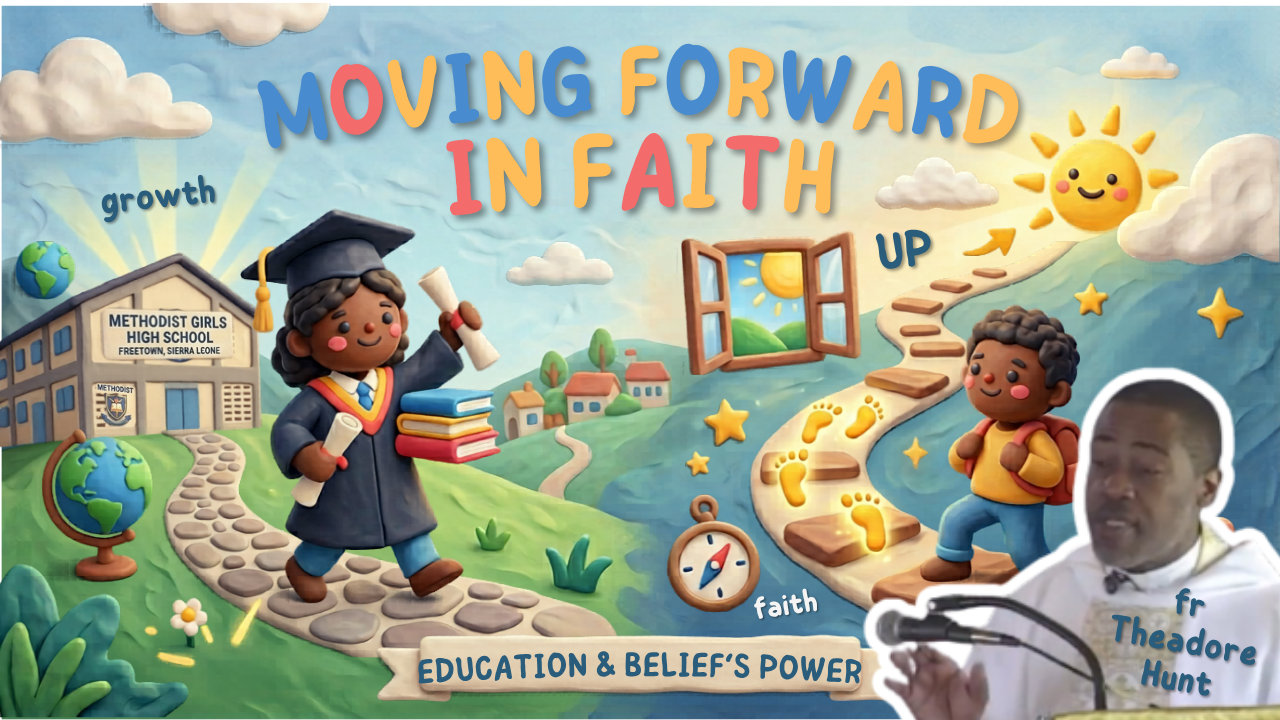
While institutional history is chequered, and the future unclear, life continues… What’s a community to do? Release past drama… Focus on God… Embrace service that transforms both those helped and the helper… We celebrate today, education that is a gift meant to uplift others: The Methodist Girls Highschool in Freetown, Sierra Leone.
As I stood before my friends and fellow community members, I felt a wave of gratitude wash over me. Ms. Johnson’s introduction was short, sweet, and to the point, but it also prompted me to reflect on this incredible opportunity to stand here and share my thoughts with you. At times, I even wondered if she was describing me because, although I’m not the tallest, I might be the sweetest. Nevertheless, it is a privilege to be here today, and I hope that what I have to share resonates with you all.
A Gathering of Thanksgiving and Faith
This afternoon, as we gather, I ask us to bow our heads in prayer for all that has been done, all that is currently happening, and for the future that lies ahead. The words from the letter of Paul to the Philippians echo this sentiment: forgetting what lies behind and straining forward to what lies ahead. We gather here not just for worship or thanksgiving but to celebrate the achievements within our community. It’s a pleasure to witness familiar and new faces alike, all contributing to this family-like environment, much like my own experiences growing up in a Methodist school in The Bahamas.
The Unintended Grace of Education
Education holds a complex history, especially when viewed through the lens of colonialism. Despite its origins in promoting social control and maintaining the status quo, it evolved into something far more. Those early missionaries couldn’t foresee the unintended yet profound impacts that education would have on future generations. Today, you are doctors, lawyers, engineers, and professionals thanks to this education. And though education wasn’t always provided with the purest of intentions, God’s grace transformed it into a vehicle for unexpected opportunities and growth.
Faith: More Than a Personal Capacity
Moving forward in faith is the theme of our gathering today. C.S. Lewis poignantly described faith as holding onto what reason once accepted, despite changing moods. Faith isn’t merely a badge we wear but a deeply empowering force that compels us to rise above the day’s challenges. Our journey in faith is less about us and more about who God is and what He can accomplish through us. A retired Bishop I respect spoke of faith as a window—its size doesn’t matter, but rather its direction. Our belief, much like a window, should face the right direction, focused on God.
Pressing Forward Despite Challenges
Our journey is never without difficulties. Organizational challenges, personal doubts, and the weight of past struggles can sometimes cloud our path. Yet, as Paul wisely advised, we must press on, forgetting what lies behind. The focus should always remain on God, who commands our faith. The work we do, both outwardly and internally, is part of this journey, intended not just for personal reward but for the benefit of those who will come after us.
Walking by Faith, Not by Sight
Reflecting on the path ahead, we may not always have clarity. Anyone with young children knows the excitement of a looming trip—a sensation we can liken to our spiritual journey. Sometimes God reveals only enough to encourage a few steps forward. Trusting in him and in his plans for us requires walking by faith, not by sight. Our efforts today, whether seen or unseen, create pathways for future generations—an enduring legacy only God comprehends.
In closing, consider those who will benefit from your efforts long after you are gone. They may not grasp the full impact now, but God knows every contribution you make. For all these things, and more, we say, “To God be the glory.” Amen.