
Subscribe to our sermon video clips on YouTube
The Misunderstood Tradition of Mothering Sunday
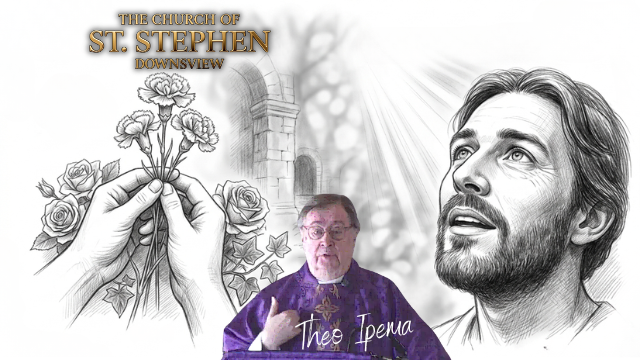
Interestingly, this day also came to be known as Mothering Sunday. While its origins are somewhat obscure, it became a day dedicated to recognizing our mothers. Revered customs emerged, like visiting one’s mother or honoring her memory through carnations—white if she had passed and red if she’s alive. Although these traditions signify respect and love for mothers, they were born outside the official liturgical texts.
Liturgical Changes and Their Impact
The liturgy’s evolution over time brought about changes that obscured the foundations of certain traditions. As a result, some fervently hold onto practices that have lost their meaning while discarding those with lasting significance. This shift led to the renaming of Palm Sunday, which became Passion Sunday—a change I deeply disagree with. I believe that while traditions like Mothering Sunday may fade, we should preserve the meaningful designations of Passion and Palm Sunday, focusing on the Gospel’s message.
The Gospel’s Revelation: Beyond Tradition
In the Gospel of John, we glimpse Jesus’ revelation to a Christian community of their time. Through the stories, such as the Samaritan woman at the well and the healing of a man born blind, we witness profound messages about seeing, believing, and light. Encountering a blind man, Jesus demonstrated extraordinary compassion in a notably public manner, even under tension.
A Life Transformed by Faith
This man, who met Jesus during a moment of danger and hostility, experienced a miraculous transformation. Believing is intertwined with seeing, and this man’s newfound faith reshaped his identity. His life, once shadowed by darkness, now illuminated by faith, became a testament to living under God’s light. For me, this narrative offers a powerful illustration of transformation brought by encountering Christ.
New Life Through Baptism
The story reminds us of our own spiritual rebirth. In the Gospel, Jesus uses clay—forged from the earth itself—to heal. This symbolic act points us to our own baptism as a moment of becoming a new creation in Christ, much like the first human from the biblical narrative. Anointed and set apart, our lives should manifest the light of Christ.
Concluding Reflections: Living as Children of Light
Especially during Lent, we must remain vigilant, reflective on aspects of our lives that shrink from light. We are called to reject darkness and embrace a living faith that illuminates through goodness, righteousness, and truth. This ongoing conversion is celebrated in our liturgical expressions, as we join with the heavenly hosts in worship.
In reflecting on these traditions and the rich narratives of the Gospel, may we always remember to seek the light in our lives, living out our faith with renewed purpose and strength.
Tags: Anglican, Christian, St Stephen, Toronto